




Quick Summary: Vintage clothing isn’t just “old stuff”—it’s a curated collection of garments at least 20 years old that offer superior craftsmanship compared to today’s fast fashion. While the hunt requires patience and a tolerance for “old lady” smells, the payoff is a unique, sustainable wardrobe that actually holds its value.
The email arrived at 3:47 PM on a Tuesday. It changed everything I knew about vintage clothing. I was sitting at my kitchen island, surrounded by half-eaten Cheerios and a cold cup of coffee, when a producer from a major morning show reached out. They wanted me to do a segment on “Modern Vintage Styling.” My first instinct? Panic. I looked at my closet and realized that most of what I called “vintage” was actually just cheap “retro” knockoffs I’d grabbed on clearance three years ago. It was a wake-up call that sent me down a three-year rabbit hole of estate sales, textile history, and more than a few fashion mistakes.
To be honest, I used to think vintage was just a fancy word for used clothes that smelled like mothballs. I was wrong. Having spent the last few years scouring bins from Portland, Maine to local church basements, I’ve learned that authentic vintage is an investment in quality that simply doesn’t exist in the 2026 retail market. If you’re tired of buttons popping off after two washes, you’re in the right place. Let’s get into the messy, beautiful reality of buying the past.
📖 Definition
Vintage clothing refers to garments produced between 20 and 100 years ago. To be considered authentic vintage in 2026, an item must have been manufactured no later than 2006, reflecting the specific design aesthetics, fabrics, and construction methods of its era.
The Great Vintage vs. Retro Confusion
One of the biggest hurdles I faced early on was realizing that “vintage-inspired” is not the same as vintage. I remember buying a “1950s swing dress” from a popular online boutique back in November 2023 for $64.50. I thought I was being so chic. Two months later, the zipper split, and the fabric felt like a plastic shower curtain. That wasn’t vintage; it was a modern garment made to look old.
Authentic vintage has soul. It has pinked seams, metal zippers, and fabric weights that could survive a minor natural disaster. When you hold a 1970s Pendleton wool blazer, you can feel the difference. It’s heavy. It’s intentional. Actually, it’s a bit depressing to realize how much the quality of our clothing has plummeted in the last two decades. According to a 2024 report by the Hot or Cool Institute, the average garment is now worn only 7 to 10 times before being discarded. Vintage pieces were built for a lifetime, not a season.
How to Spot the Real Deal
If you’re out in the wild—maybe at a local thrift shop or a high-end vintage boutique—look at the tags. If you see a “Made in China” tag with a website URL, it’s not vintage. Look for union labels or “Made in the U.S.A.” tags with vintage typography. Also, check the hardware. Plastic zippers didn’t become the standard until the late 1960s. If you find a dress with a heavy metal side-zip, you’ve likely found a gem from the 40s or 50s.
💡 Pro Tip Always carry a small measuring tape in your purse. Vintage sizing is notorious for being smaller than modern vanity sizing. A 1960s “Size 12” is often closer to a modern “Size 4” or “Size 6.”
Why I Stopped Buying New (Mostly)
I’ll be the first to admit: shopping for vintage is exhausting. It’s not like scrolling through a website where everything comes in your size and ships in two days. But after I started designing my own capsule wardrobe, I realized that three high-quality vintage pieces did more for my style than twenty fast-fashion tops ever could.
The cost-per-wear is where the math really starts to favor the old stuff. I bought a 1980s leather trench coat at an estate sale in 2024 for exactly $42.00. I have worn it at least twice a week every autumn and spring since. Meanwhile, the $120 “faux leather” jacket I bought from a mall brand around the same time started peeling within six months. It’s now in a landfill somewhere, which breaks my heart a little.
💰 Cost Analysis
$120.00
$42.00
Beyond the money, there’s the environmental impact. The fashion industry is responsible for about 10% of global carbon emissions. By buying vintage, you’re opting out of that cycle. It’s the ultimate form of recycling. Plus, you won’t show up to the PTA meeting wearing the same Zara blouse as three other moms. Trust me, I’ve been there, and it’s awkward.
The Hunt: My Secret Spots and Strategies
People always ask me, “Maria, where do you find these things?” To be honest, I find them in places most people avoid because they don’t want to dig. Last March, I spent four hours in a dusty warehouse in rural Pennsylvania. My allergies were screaming, but I walked out with a 1960s silk scarf and a pair of perfectly broken-in Levi’s 501s from 1994. Total cost? $18.75.
Estate Sales: The Gold Mine
Estate sales are where the real treasures live. Use apps like EstateSales.net to find sales in older neighborhoods. Go on the last day—usually a Sunday—when most items are 50% off. I once scored a pristine Hartmann vanity case for $12.00 because nobody else knew what it was. It’s now a permanent fixture on my shelf, and I even talked about it in my guide on fashion framing as art.
Curated Vintage Shops
If you don’t have the patience for digging, curated shops are your best bet. You’ll pay more—think $75 to $200 for a dress—but the work of cleaning, mending, and authenticating is done for you. I frequent a shop called “The Velvet Hanger” here in town. The owner, Sarah, knows I love 1970s boho prints, and she’ll text me when something special comes in. It’s a relationship, not just a transaction.
📊 According to the 2024 ThredUp Resale Report, the global second-hand apparel market is expected to reach $350 billion by 2028, growing 3x faster than the overall apparel market.
The Dirty Reality: Stains, Smells, and Regret
Let’s get real for a second. Vintage isn’t all glamour. Sometimes it’s gross. I once bought a gorgeous 1950s wool coat from a flea market for $35.00. I was so excited I didn’t notice the faint smell of “old basement” until I got it into my warm car. That smell is stubborn. I tried the vodka spray trick, the sunshine method, and three different dry cleaners. Nothing worked. I eventually had to give it away. It was a $35 lesson in always sniffing the armpits before you buy.
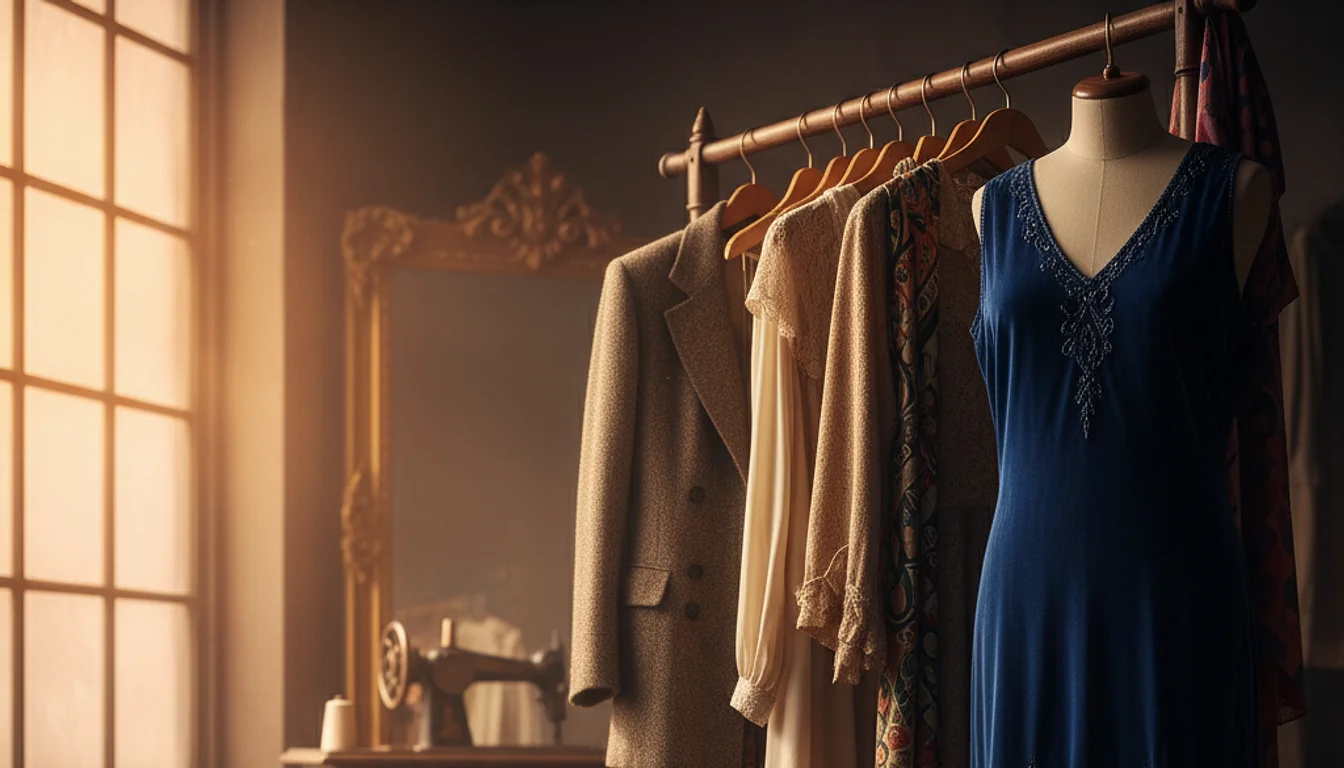
Another thing? The fragility. I wore a stunning 1940s rayon dress to a wedding last summer. I sat down a bit too quickly, and the 80-year-old fabric just… gave up. A six-inch tear appeared right along the hip. I spent the rest of the night hiding behind my clutch bag. You have to treat these garments with respect. They are survivors, but they aren’t invincible.
⚠️ Warning: Never put authentic vintage (pre-1990s) in a modern washing machine or dryer unless you are 100% sure of the fiber content. Heat and agitation are the enemies of old thread.
Common Pitfalls to Avoid
- Dry Rot: If you pull on a piece of vintage fabric and it makes a tiny “cracking” sound or tears like paper, it has dry rot. It cannot be fixed. Walk away.
- Shattered Silk: Common in Victorian and Edwardian pieces. The silk literally breaks into shards. These are for display only, not for wearing.
- Hidden Stains: Check under the arms and around the collar in natural light. Yellowing from sweat is often permanent on older silks and polyesters.
Integrating Vintage Into a 2026 Wardrobe
The goal isn’t to look like you’re wearing a costume. Unless it’s Halloween, you probably don’t want to look like a direct extra from Mad Men. The secret is the “One Piece Rule.” I always pair one vintage item with modern basics. For example, I’ll wear a 1970s embroidered vest over a crisp white tee and my favorite Good American jeans. It keeps the look grounded in the present while giving a nod to the past.
I’ve actually found that vintage pieces help me fix some of the clothing mistakes I stopped making recently. I used to buy trendy items that felt “disposable.” Vintage forces me to slow down. I have to think about how to style a specific 1960s skirt because it’s a unique shape. It encourages creativity rather than just following a TikTok trend.
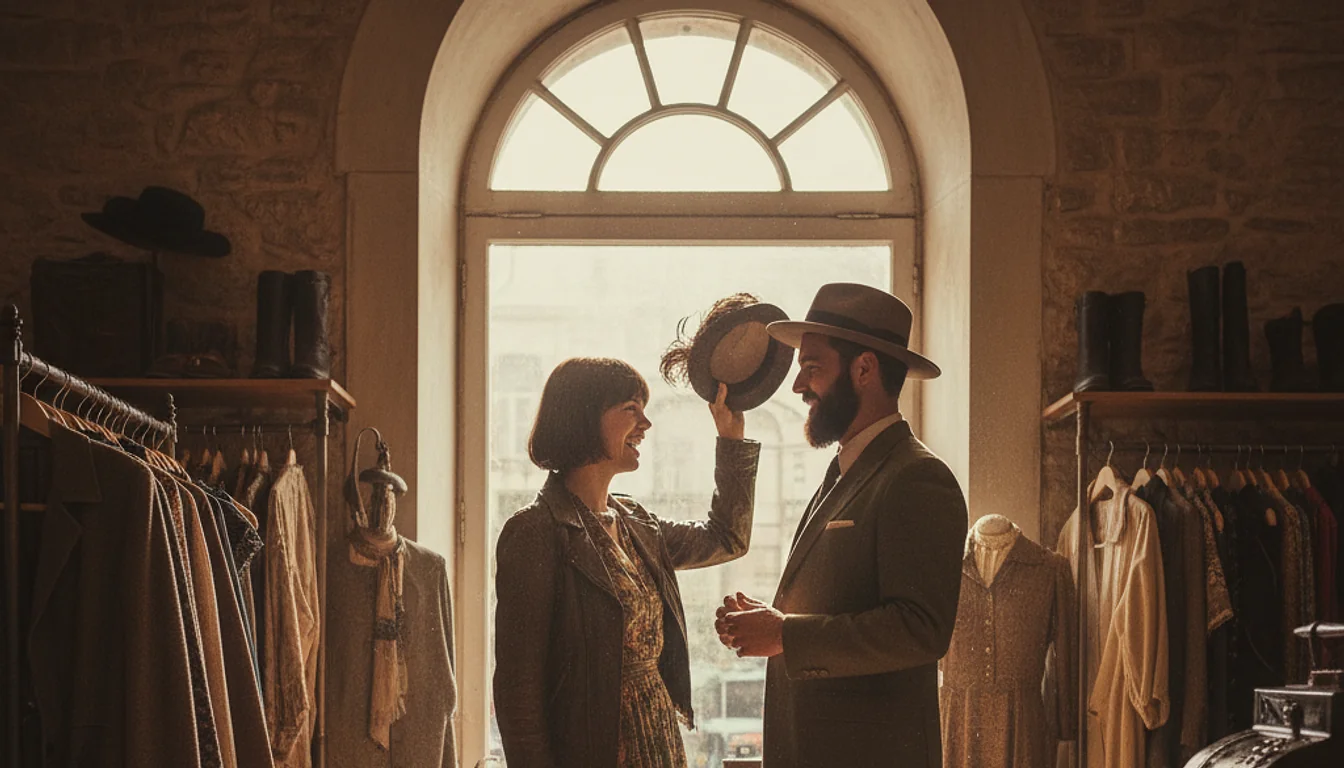
My Go-To 2026 “Mom-Style” Vintage Look
- High-waisted 1990s “Mom Jeans” (actual vintage Levis or Wranglers).
- A modern, high-quality pima cotton bodysuit.
- A vintage oversized blazer from the 80s with the shoulder pads removed.
- Modern leather sneakers for comfort.
Is It Actually Worth the Effort?
I won’t lie to you: there are days when I just want to walk into a department store and buy a dress that I know will fit and doesn’t require a special trip to a specialized tailor. But then I catch a glimpse of myself in my 1950s floral housecoat—the one I found for $22.50 in a thrift shop in Savannah—and I feel like a version of myself that isn’t just “Mom” or “Blogger.” I feel like a curator of history.
Vintage clothing teaches you patience. It teaches you to appreciate the way a garment is made. It forces you to care for your things because you know you can’t just go out and buy another one. In a world that feels increasingly disposable and fast-paced, there’s something incredibly grounding about wearing a piece of clothing that has already lived a full life before it even met you.
And that’s when it finally clicked. I didn’t need to panic about that TV segment. I didn’t need a closet full of “perfect” clothes. I just needed to tell the story of the pieces I already loved—the ones with the frayed edges and the history in their threads.
✅ Key Takeaways
- Vintage is defined as items 20-100 years old (2006 or earlier for 2026). – Always check for quality indicators like metal zippers and union labels. – Sizing is vastly different; always measure the garment, not the tag. – Maintenance is key—avoid modern laundry machines for delicate pieces. – Balance is essential: mix one vintage piece with modern staples to avoid looking “costumey.”