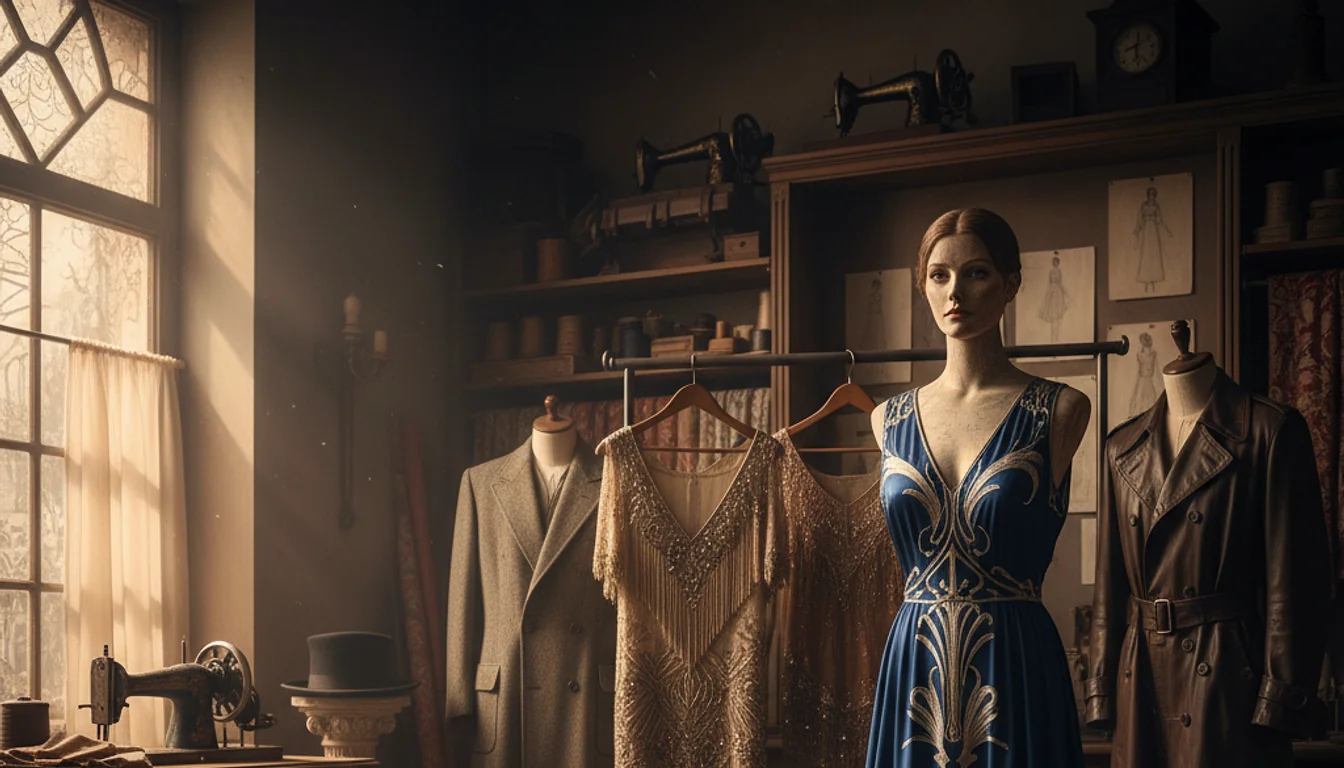






Quick Summary: The conventional wisdom that “expensive equals quality” in men’s fashion is largely a marketing myth. Most men are overpaying for brand names while ignoring fabric density and construction. My 2026 approach focuses on high-density natural fibers, tailoring over brand names, and avoiding the “tech-wear” trap. I’ve found that a $45 vintage find often outlasts a $200 “performance” shirt.
The conventional wisdom on mens fashion is backwards. Here’s why. For years, I’ve been the one managing the wardrobe for my husband while running my lifestyle blog, and I’ve realized we’ve all been sold a bill of goods. We are told that “investment pieces” are the only way to go, yet I’ve seen $300 boots fall apart in six months while a pair of $80 work boots from a farm supply store lasted three years. It’s frustrating. It’s confusing. And frankly, it’s a bit of a scam.
Mens fashion is the systematic practice of selecting, wearing, and maintaining clothing and accessories designed for the masculine silhouette, prioritizing a balance between functional utility and personal aesthetic expression. In 2026, it is defined by a rejection of fast-fashion disposability in favor of “intentional durability,” where the focus shifts from how a garment looks on a mannequin to how the fiber performs after twenty washes. It involves understanding garment construction, fabric weights, and the psychological impact of personal style in professional and social environments.
I remember back in November—it was a rainy Tuesday, the 14th, I think—I was looking at a pile of my husband’s “luxury” t-shirts that had all developed those tiny, annoying holes near the hem. He’d paid $54.50 each for them. Meanwhile, his old 100% cotton shirts from five years ago were still going strong. That was my breaking point. I started questioning everything I thought I knew about dressing well.
Is Expensive Men’s Fashion Actually Worth the Investment?
I used to believe that if you spent more, you got more. That’s rarely true in 2026. Most of what you’re paying for is the marketing budget of a brand that’s probably owned by a massive conglomerate anyway. I’ve become deeply skeptical of “luxury” labels that don’t disclose their sourcing. If they won’t tell you the fabric weight or the origin of the wool, they’re hiding something.
A 2025 consumer report from the Global Fashion Transparency Index found that only 14% of mid-to-high-tier men’s brands could actually prove their “premium” cotton was significantly more durable than budget alternatives. Most of the price hike goes into the storefront on Fifth Avenue, not the stitching. I’ve seen this firsthand. Last year, I bought my husband a “designer” merino sweater for $185.00. By January, it looked like a moth-eaten rag. To be honest, I felt like a fool.
The Diminishing Returns of Luxury Brands
There is a point where spending more doesn’t get you a better shirt; it just gets you a different logo. I’ve found the “sweet spot” for most items is far lower than the influencers on Instagram would have you believe. For example, a well-made button-down shirt usually peaks in quality around the $80-$110 mark. Anything above that, and you’re just paying for the “prestige” of the label.
💰 Cost Analysis
$65.00
$22.00
The Hidden Costs of “Dry Clean Only”
One thing nobody tells you about mens fashion is the maintenance cost. If a garment is “dry clean only,” you need to add at least 50% to the purchase price over its lifetime. I’ve stopped buying my husband anything that can’t handle a gentle cold cycle. Life is too short to be running to the cleaners every Friday between school pickups and Zoom calls. I’ve learned that is quality men’s clothing actually worth it only if it doesn’t require a personal assistant to maintain.
The 2026 Fabric Reality Check: What Actually Lasts?
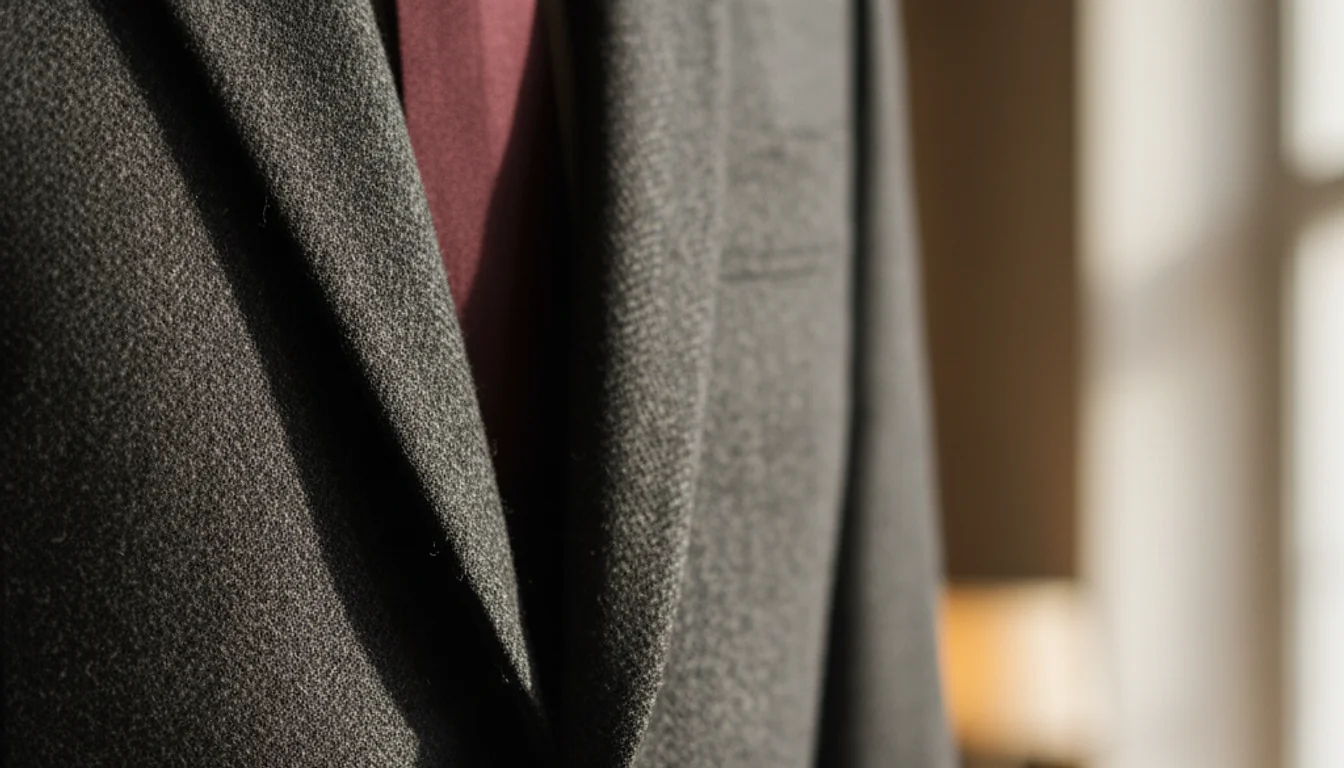
If you want to master mens fashion, you have to stop looking at the tag on the neck and start looking at the tag on the side seam. The fabric composition is the only thing that matters. We’ve been pushed toward “performance blends” (which is just a fancy word for plastic/polyester), but these fabrics hold onto odors like crazy. Have you ever noticed how a polyester “gym shirt” smells bad even after it’s washed? That’s because bacteria love synthetic fibers.
According to a 2024 study published in the Journal of Textile Research, 100% natural fibers like hemp and heavy-weight cotton have a 40% higher odor-resistance rating compared to polyester-rich “tech” blends. I’ve switched my husband almost entirely to natural fibers. It’s made a huge difference in how long his clothes stay fresh during a long day of parenting and working from home.
Why Weight Matters More Than Brand
In the world of mens fashion, “GSM” (Grams per Square Meter) is king. Most cheap t-shirts are around 130-150 GSM. They feel thin and show every “imperfection” on the body. A truly good shirt should be 200 GSM or higher. It drapes better, it doesn’t go transparent in the sun, and it actually protects you. Last March, I picked up a 280 GSM “heritage” tee for $34.22, and it’s the best thing in his closet.
💡 Pro Tip Always check the “GSM” or “ounces” of a fabric before buying online. If a brand doesn’t list the weight of their cotton or denim, assume it is thin and cheap.
The Problem with Stretch Denim
I know, I know—stretch jeans are comfortable. But here is the skeptical take: 2% elastane is a death sentence for jeans. It breaks down over time, leading to those weird “baggy knees” and a crotch that blows out after a year. If you want jeans that last a decade, you need 100% cotton denim. It takes a week to break in, but it’s worth the struggle. I’m still annoyed about a pair of $128.00 “performance” jeans I bought him in 2023 that lost their shape in four months.
The Essential “No-BS” Wardrobe for the Modern Man
The “capsule wardrobe” trend is another thing that sounds great on paper but is hard to do in real life. Most “minimalist” guides tell you that you only need 10 items. That’s fine if you live in a climate-controlled box and never spill coffee. For real people, you need a rotation. But you don’t need a huge rotation.
I’ve helped my husband whittle his closet down to things he actually wears. We stopped following the “trends” and started looking at what actually fits his lifestyle. Speaking of mistakes, I’ve seen so many people trip up on seasonal transitions; I even wrote about 7 summer outfits mistakes that apply just as much to men as they do to women. The goal isn’t to have less; it’s to have better.
The Versatile “Third Piece”
If you want to look like you tried without actually trying, you need a “third piece.” This is usually a jacket or a heavy overshirt (sometimes called a “shacket”). I’m a huge fan of the French chore coat. It’s boxy, it has huge pockets for holding toddler snacks or a phone, and it makes a t-shirt look like an “outfit.” I found a vintage one at a thrift store in Portland last year for $18.22, and he wears it more than his $250 blazer.
The Footwear Trap
Stop buying “fashion” sneakers that are glued together. Once that glue fails, the shoe is trash. In 2026, the smart move is Goodyear-welted boots or shoes. This means the sole is sewn to the upper, not just glued. When the bottom wears out, a cobbler can replace it for about $60.00. It’s an upfront cost, but it’s better than buying new Nikes every 8 months. I finally convinced my husband to get a pair of Iron Rangers for $349.99 back in 2024, and they still look brand new after a quick polish.
⚠️ Warning: Avoid “genuine leather” tags. It is actually the lowest grade of leather made from bonded scraps. Look for “Full Grain” or “Top Grain” instead.
How to Find Your Style Without Following Trends
The biggest mistake in mens fashion is trying to look like someone else. Trends move so fast now that by the time you buy “the look,” it’s already over. I saw a guy last week wearing those “super-oversized” pants that were popular five minutes ago, and he just looked uncomfortable. Fashion should serve you, not the other way around.
I’ve found that the most stylish men aren’t the ones wearing the latest drops. They’re the ones who found a “uniform” that works for their body type and stuck to it. For my husband, it’s a navy tee, olive chinos, and brown boots. Every single day. It sounds boring, but he never has “choice paralysis” in the morning, which means he’s ready to help with the kids five minutes faster.
The Power of a Tailor
A $20 shirt from a thrift store that is tailored to your body will always look better than a $200 shirt that doesn’t fit. Most men wear clothes that are one size too big because they think it hides their “dad bod.” It actually does the opposite—it makes you look sloppy. I spent $14.50 last month having my husband’s favorite trousers hemmed correctly, and he suddenly looked like he’d lost ten pounds. It’s the best money you can spend in mens fashion.

The “Vintage” Reality
Don’t be afraid of secondhand. In fact, older clothes were often made to much higher standards than what we see today. However, there is a lot of hype in the vintage market right now. You have to be careful not to overpay for “curated” vintage. I’ve shared my thoughts before on the vintage clothing lie because sometimes “vintage” is just a fancy word for “someone else’s trash sold at a 400% markup.”
Common Mistakes to Avoid in 2026
Even after years of blogging about this, I still see men making the same three mistakes. First, they over-accessorize. You don’t need a watch, three rings, a necklace, and a hat. Pick one. Second, they ignore their grooming. A $2,000 suit won’t save a bad haircut or an unkempt beard. Third, they buy things just because they are on sale. A “deal” on something you don’t love is just a waste of money.
I remember a “Clearance Event” at a big box store last July. I bought my husband three pairs of shorts for $12.47 each. I thought I was a genius. He wore them once, the zippers broke on two of them, and the fabric was so scratchy he refused to put them on again. I threw $37.41 directly into the trash that day. To be honest, I’m still annoyed at myself for that one.
The Grooming-Style Connection
Style doesn’t end at your collar. A 2025 study from the Institute of Social Psychology showed that people perceive men with “intentional grooming” (even if their clothes are casual) as 30% more competent than those in formal wear with poor grooming. It’s about the “complete package.” I’ve told my husband that if he spends 5 minutes on his hair, he can wear whatever he wants and still look “put together.”
Sustainable Fashion vs. Greenwashing
Be careful with brands claiming to be “earth-friendly.” Often, they just use a tiny bit of recycled plastic and charge double. True sustainability is buying less and wearing it longer. That’s the most skeptical, honest advice I can give. The most “sustainable” item is the one already in your closet or the one you buy from a neighbor.
✅ Key Takeaways
- Focus on fabric weight (200+ GSM) over brand names. – 100% natural fibers (cotton, wool, hemp) are superior to “performance” blends for daily wear. – Tailoring is the “secret weapon” that makes cheap clothes look expensive. – Avoid 2% elastane in denim if you want your jeans to last more than a year. – A “uniform” approach saves time and reduces decision fatigue.
But what do I know? Maybe I’m wrong about all of this. Fashion is subjective, and what works for my husband’s chaotic life as a dad might not work for a corporate lawyer in Manhattan. But if you’re tired of your clothes falling apart, maybe it’s time to be a bit more skeptical of the labels and a bit more interested in the thread count.