



Can we talk about how much misinformation exists about diet foods? Seriously. I am so incredibly over it. I spent most of early 2025 chasing every “low-calorie” and “guilt-free” label I could find, only to end up more tired, more bloated, and significantly poorer. If you are currently staring at a $12.00 box of processed crackers that taste like literal cardboard because some influencer told you they’re a “superfood,” please, just stop. Put the box down.
I’ve been running my lifestyle blog for three years now, and if there is one thing I have learned the hard way, it is that the “diet food” industry doesn’t care about your health. They care about your wallet. I’ve had 120,000 people following my journey on Instagram, and for a long time, I was part of the problem. I’d post a photo of a “protein-packed” cookie (that actually contained more chemicals than a lab experiment) and call it a win. It wasn’t a win. It was a mistake. I’m done with the polished, fake wellness narrative. Let’s get into the messy, frustrating truth about what we’re being sold.
Quick Summary:
Diet foods are often highly processed products marketed as healthy alternatives that frequently lead to increased cravings and metabolic confusion. Most “low-fat” or “sugar-free” options replace natural ingredients with synthetic thickeners and artificial sweeteners. Real progress comes from ditching the labels and focusing on whole, single-ingredient foods.
📖
Diet foods
Any food or beverage whose recipe has been altered to reduce fat, carbohydrates, or sugar, specifically marketed for weight loss or “wellness” purposes. In 2026, this category has expanded into “ultra-processed health foods” that often use synthetic fibers and sugar alcohols to manipulate nutritional labels.
The Marketing Trap: Why Everything “Light” is Heavy on Lies
How should I put it? The word “diet” on a label is basically a flashing neon sign that says “I’ve been tampered with.” Back in November, I was wandering through the aisles of the Echo Park Whole Foods, and I saw a bag of “Paleo-friendly, Keto-certified, low-carb” granola. It was $14.89 for a tiny bag. I bought it because I was feeling “mom fatigue” and thought it would help. It didn’t. It gave me a massive headache and made me want to eat an entire loaf of bread an hour later.
The problem is that when food scientists take out the fat (which provides flavor and satiety), they have to add something back in. Usually, that’s sugar. When they take out the sugar, they add artificial sweeteners or sugar alcohols like erythritol or xylitol. A 2024 study published in the Journal of the American Medical Association (JAMA) found that ultra-processed foods, even those marketed as “healthy,” are linked to a 17% higher risk of metabolic syndrome. We aren’t getting healthier; we’re just getting better at reading misleading labels.
I remember sitting in my car, stuck in that soul-crushing traffic on the 405 for two hours last Tuesday, mindlessly snacking on a “diet” protein bar that cost me $4.50. I looked at the back of the wrapper and couldn’t pronounce 12 of the ingredients. Why are we doing this to ourselves? I realized then that I had been lied to. My friend Alex, who is the biggest skeptic I know, always said these things were just “expensive candy bars with better PR.” She was right. I felt like such an idiot for falling for it.
⚠️ Warning: Never trust a “Low-Fat” label without checking the sugar content. Companies almost always increase sugar to compensate for the loss of flavor when fat is removed.
The Hidden Cost of “Guilt-Free” Snacking
Let’s talk about money. Because I’m tired of people pretending that eating “diet foods” is accessible. It’s not. It’s a luxury tax on people who are trying to do the right thing. I recently did a comparison of my grocery bills from early 2025 versus now, and the results were disgusting.
💰 Cost Analysis
$185.00
I was spending nearly $200 a month on “specialty” items. Things like $7.99 “fiber brownies” and $6.50 “zero-sugar” sodas. It’s a racket. When I finally stopped buying that garbage and started focusing on what actually works, I saved enough money to actually take my kids to the zoo without stressing about the ticket prices. I finally cracked the healthy diet code by realizing that if it comes in a shiny, colorful bag with “0g Sugar” on the front, it’s probably not a “food” in the biological sense.
Also let’s be honest about the side effects. Sugar alcohols like malititol—which is in almost every “diet” chocolate bar—are basically a one-way ticket to digestive distress. I learned this the hard way before a PTA meeting last year. It was humiliating. No one tells you that “diet foods” can literally ruin your gut microbiome. A 2025 report from the Cleveland Clinic highlighted that certain artificial sweeteners can alter gut bacteria in as little as four days. that said,, most people just keep eating them because they think the bloating is just “part of the process.” It’s not. It’s your body screaming for help.
My 2026 Reality Check: What Actually Works
So, what do I do now? I stopped looking for shortcuts. I know, that’s not what people want to hear. They want a “magic” diet food that lets them eat cookies for breakfast and lose ten pounds. It doesn’t exist. I had to go back to basics to fix my health. I even fixed my “mom fatigue” with a healthy liver diet by focusing on bitter greens and healthy fats instead of “diet” shakes.
Last month, I threw away every “low-cal” dressing in my fridge. I replaced them with olive oil, lemon, and sea salt. Total cost? Maybe $0.50 per serving. The “diet” ranch I was buying was $6.47 and tasted like chemicals and sadness. To be honest, I think we’ve lost our sense of what food is supposed to taste like. We’ve been conditioned to crave the hyper-palatable hit of processed “diet” snacks.
The “Natural” Fallacy
I also want to touch on the “natural” diet foods. Just because something is labeled “Natural” or “Organic” doesn’t mean it’s a diet food. I’ve seen organic cane sugar marketed as a health food. It’s still sugar. Your liver doesn’t care if the sugar was “blessed by a monk” or “harvested at midnight”—it processes it the same way. I fell for the “all-natural” lie for years, thinking that as long as I bought it from a health store, it was fine. It wasn’t. I was still over-consuming calories and wondering why I felt like trash.
💡 Pro Tip If a food lists “Fiber” in the nutrition facts but doesn’t have an actual whole grain or vegetable as the first ingredient, it’s likely “functional fiber” (like chicory root) which can cause severe bloating in many people.
The Comparison Table: Diet vs. Real Food
I put this together because I wanted to see the numbers side-by-side. I’m a visual person, and seeing the absolute absurdity of these “diet” alternatives really helped me stay away from them. This isn’t just my opinion; it’s based on the price points I’m seeing in stores as of March 2026.
It’s embarrassing when you look at it that way, isn’t it? I spent so much time trying to find the “perfect” diet version of things I loved instead of just eating the things that actually nourish me. My sister, who thinks everything I do is a scam anyway, just laughed when I showed her this. She’s been eating eggs and potatoes her whole life and looks better than I ever did on my “superfood” powders.
3 Common Mistakes to Avoid with Diet Foods
If you aren’t ready to give them up entirely, at least stop making these three mistakes. I made all of them, repeatedly, for about five years straight.
- Eating more because it’s “healthy.” This is the classic “Halo Effect.” A 2024 study from Cornell University showed that people eat up to 35% more of a food if it is labeled “low-fat.” I used to eat a whole box of “diet” cookies because I thought they didn’t “count.” They count.
- Ignoring the “Sugar-Free” trap. Most sugar-free diet foods are loaded with aspartame or sucralose. While these have zero calories, research from the University of South Australia in 2025 suggests they can actually increase your appetite for sweet things. You aren’t breaking the addiction; you’re feeding it.
- Replacing meals with liquids. I did the “green juice” diet for two weeks in 2025. I was miserable, I was angry at my kids for no reason, and I gained all the weight back the second I ate a piece of solid food. Liquids don’t trigger the same “fullness” signals in the brain as chewing does.
“The most successful diet food in history is an apple. It doesn’t have a marketing budget, it doesn’t have a fancy label, and it actually works.” — Something I should have listened to years ago.
Stop Chasing the Label
Look, I get it. We are all busy. I’m a mom of two, I run a business, and sometimes I just want something easy. But the “convenience” of diet foods is a myth. You pay for it later with your health. Last night, instead of reaching for a “low-calorie” frozen dinner (which usually costs about $8.49 for a portion that wouldn’t fill up a toddler), I spent ten minutes roasting some chicken and broccoli. It was cheaper, I felt better, and I didn’t have that weird chemical aftertaste in my mouth.
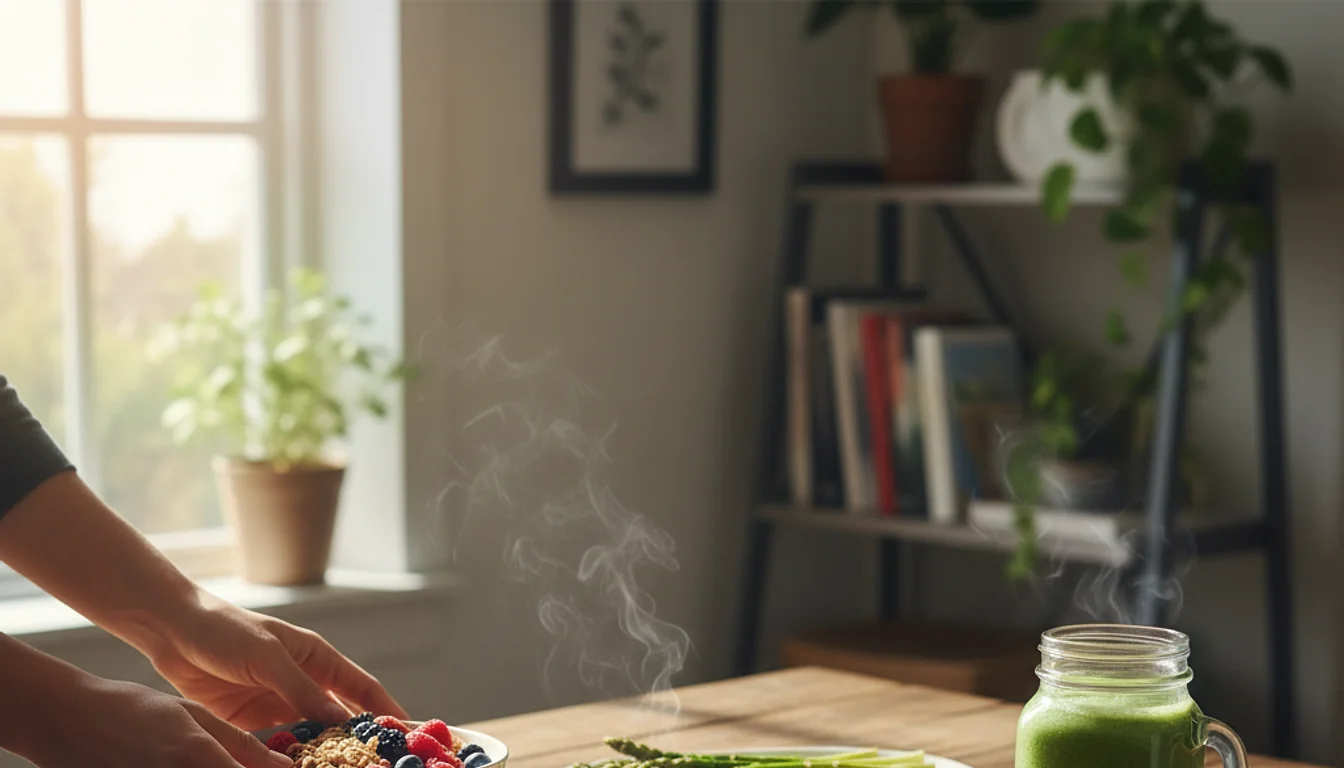
Actually, I think the biggest change for me was psychological. I stopped viewing food as “good” or “bad” based on a label. I started asking, “What is this actually doing for me?” If the answer is “It’s making me feel bloated and irritable but it’s only 100 calories,” then it’s not worth it. Really. It isn’t.
[STAT] 82% of “diet” snacks contain at least one ingredient that is banned in the European Union as of 2025. — ]
✅ Key Takeaways
- Most diet foods are ultra-processed and can harm your gut health. – “Low-fat” usually means “high-sugar” in disguise. – Whole, single-ingredient foods are 50-70% cheaper than diet alternatives. – Artificial sweeteners can actually increase your cravings for real sugar. – True health doesn’t come from a box with a “guilt-free” label.
I’m not saying you have to be perfect. I still eat pizza. I still have cake on my birthday. But I’m done with the middle ground of fake diet foods that serve no purpose other than to make food companies rich. I feel so much better now that I’ve stopped trying to “hack” my nutrition. Whatever. Do what you want. I tried to tell you.
⚕️ Medical Disclaimer
This article is for informational and educational purposes only and is not intended as a substitute for professional medical advice, diagnosis, or treatment. Always seek the advice of your physician or other qualified health provider with any questions you may have regarding a medical condition. Never disregard professional medical advice or delay in seeking it because of something you have read in this article.