



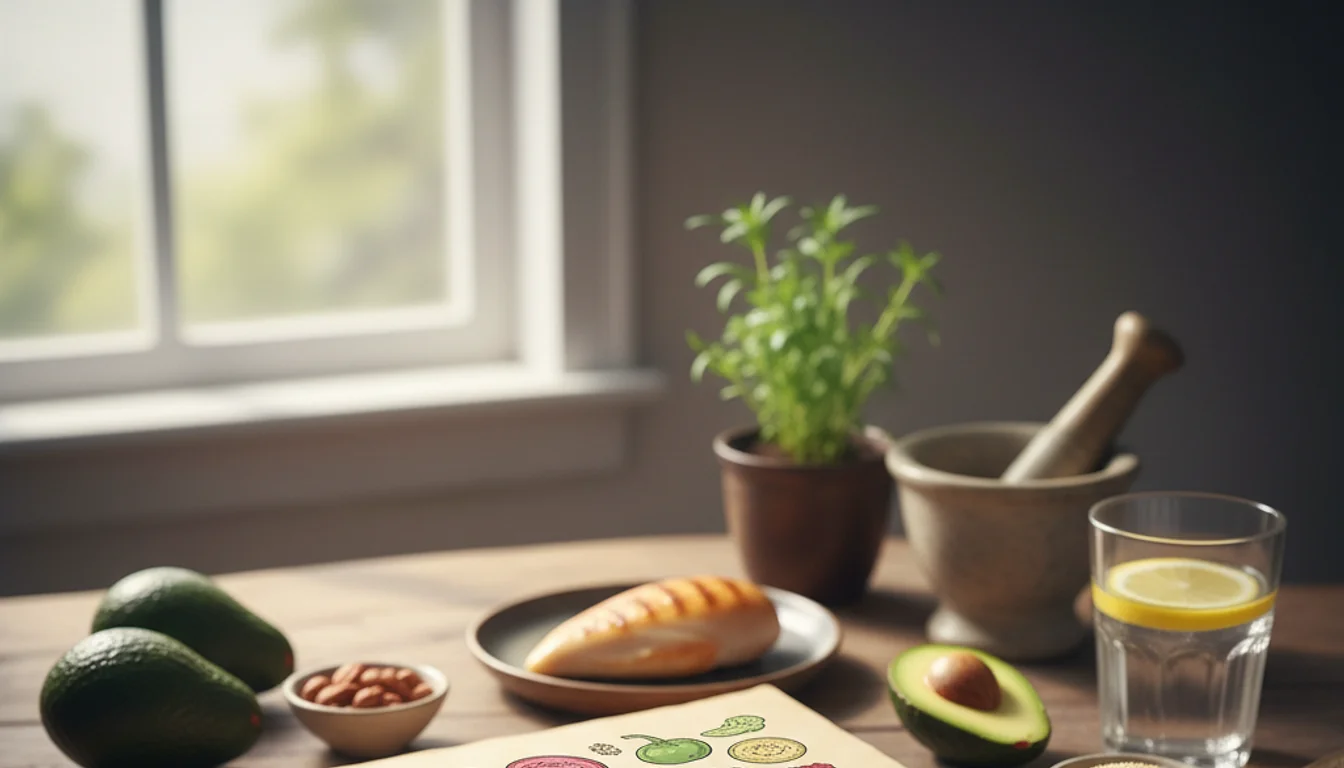
Quick Summary: A nutrition plan isn’t a restrictive diet; it’s a flexible framework for eating that matches your energy needs. Stop looking for “magic” foods. Instead, focus on hitting your protein targets, prepping 80% of your meals, and leaving 20% for “soul food” like pizza or wine. Consistency beats perfection every single time.
I’ve been sitting on this nutrition plan revelation for weeks and I can’t keep it to myself anymore. To be honest, I spent most of 2024 feeling like a total failure in the kitchen. Between managing my five-year-old’s sudden hatred of “green things” and trying to keep my lifestyle blog afloat, I was basically living on cold coffee and my kids’ leftover chicken nuggets. I felt sluggish, moody, and just… blah.
A nutrition plan is essentially a strategic roadmap for your daily food intake, designed to balance macronutrients—proteins, fats, and carbohydrates—to support your specific health goals. It is not about deprivation. Instead, it’s about intentionality. By defining what your body needs to thrive, you move away from reactive eating and toward a sustainable lifestyle that fuels your brain and body consistently.
I finally hit a breaking point last November. I remember standing in the Target in Echo Park, staring at a wall of protein bars, feeling completely overwhelmed by the conflicting advice online. “Keto is king!” “No, go vegan!” “Wait, fasting is the only way!” I bought a $19.99 food scale and decided to stop listening to the “gurus” and start listening to my own biology. Here is what I learned about building a plan that actually sticks in 2026.
Why Most “Custom” Nutrition Plans Fail (And What I Did Differently)
I used to think a nutrition plan had to be this rigid, 12-page PDF filled with tilapia and asparagus. I actually paid a “fitness influencer” $150 for one back in 2024, and I lasted exactly four days. It was too hard. It didn’t account for the fact that I’m a human being who likes tacos on Tuesdays.
The biggest mistake we make is trying to change everything at once. We think we need to go from “fast food” to “organic kale” overnight. That is a recipe for burnout. My breakthrough came when I realized that a nutrition plan should be a scaffold, not a cage. It should support your life, not become a second full-time job. I started focusing on small, non-negotiable wins rather than total perfection.
The Problem with “All or Nothing”
When you tell yourself you “can’t” have something, your brain wants it ten times more. It’s basic psychology. In my new approach, nothing is off-limits. If I want a cookie, I have a cookie. But I make sure that cookie fits into the broader context of my day. I stopped viewing food as “good” or “bad” and started seeing it as “fuel” or “fun.”
The 80/20 Reality Check
I aim for 80% whole, nutrient-dense foods—think eggs, berries, spinach, and lean meats. The other 20% is for sanity. This usually looks like a glass of red wine on Friday night or a sourdough grilled cheese when I’ve had a rough day with the kids. This flexibility is the only reason I’m still doing this three months later.
💡 Pro Tip Don’t track every single leaf of spinach. Focus on your protein and total calories first. The rest usually falls into place naturally if you’re eating mostly whole foods.
The 3 Pillars of a Sustainable 2026 Nutrition Plan
If you want to feel better by January 2026, you don’t need a miracle. You need a system. After months of trial and error, I narrowed my plan down to three main pillars that actually move the needle. These are the things that helped me stop the 3 PM energy crash and finally feel like I could keep up with my preschooler.
Pillar 1: The “Lazy” Macro Method
I don’t have time to weigh every blueberry. I just don’t. Instead, I use the “Hand Method” which I learned from a 2024 Precision Nutrition study. Your palm is your protein portion, your fist is your veggie portion, your cupped hand is your carb portion, and your thumb is your fat portion. It’s not 100% precise, but it’s 90% there, and it takes zero extra time.
Pillar 2: The Sunday 90-Minute Prep
I realized that if I don’t have cooked protein in the fridge, I will order DoorDash. Period. Every Sunday afternoon, while my husband takes the kids to the park, I spend exactly 90 minutes in the kitchen. I don’t make full meals; I make components. I roast two trays of veggies, grill three pounds of chicken, and boil a dozen eggs. My grocery haul at Trader Joe’s usually costs around $87 for these staples. Having these ready to go is a nutrition plan lifesaver.

Pillar 3: Strategic Supplementation
I’m a big believer that food comes first, but sometimes we need a little help. For me, that meant adding a high-quality magnesium supplement at night and occasionally using CBD to manage my stress levels, which usually lead to emotional eating. I’ve written about my experience with vegan CBD gummies before, and they really helped me stop that late-night snacking habit by keeping me calm before bed.
⚠️ Warning: Avoid “detox teas” or “appetite suppressant” lollipops. They are almost always just laxatives in disguise and can seriously mess up your gut health.
Cost Analysis: DIY vs. Professional Coaching
Is it worth paying for a plan? Honestly, it depends on your personality. If you need someone to hold your hand, a coach might be great. But for most of us, the tools are already out there for free or very cheap. I personally use the Carbon Diet Coach app, which costs me $9.99 a month, and it’s been better than any human coach I’ve ever hired.
💰 Cost Analysis
$150.00
$9.99
When you look at it that way, the DIY or app-based route is a no-brainer. I’d rather spend that $200 on high-quality grass-fed beef or a nice pair of walking shoes. Speaking of saving money, I’ve also learned to be smart about other expenses. Just like I learned how I saved $342.18 with Fashion Nova coupons, I apply that same “budget-first” mentality to my grocery shopping. I buy meat in bulk at Costco—usually paying about $14.99 for a massive pack of eggs—and stick to seasonal produce to keep costs down.

My “Cheat Sheet” for Busy Parents
Parenting and a nutrition plan often feel like they are at war with each other. Last Tuesday, for example, I had this beautiful salmon dinner planned. Then, my son had a meltdown over a blue crayon, the dog threw up, and suddenly it was 7 PM and I hadn’t even preheated the oven.
In those moments, you need a “Plan B.” My Plan B is a “Rotisserie Chicken Salad.” I keep a pre-cooked chicken from the store in the fridge. I throw it over some bagged arugula, add some pre-sliced almonds, and boom—healthy dinner in 3 minutes. It’s not fancy, but it keeps me on track.
Common Mistakes to Avoid
- Drinking your calories: I didn’t realize my “healthy” morning smoothie from the shop down the street had 600 calories and 80g of sugar. Now I make my own.
- Ignoring sleep: If I sleep less than 6 hours, my hunger hormones (ghrelin) go crazy. A 2023 study in the Journal of Sleep Research found that even one night of poor sleep increases your desire for high-calorie foods by 45%.
- Social media envy: Don’t compare your “Day 1” to someone else’s “Day 1000.” Those fitness models on Instagram have lighting, filters, and often, very different goals than a busy mom.
The Results: 3 Months into My 2026 Journey
I’m not going to tell you I have a six-pack now. I don’t. But what I do have is consistency. I feel stronger when I’m lifting my kids. I don’t need a nap at 2 PM anymore. And most importantly, I’ve stopped feeling guilty about food.
Actually, the biggest change was my mental clarity. I used to feel so foggy by mid-afternoon. By sticking to my nutrition plan and making sure I’m getting enough healthy fats and protein, that fog has mostly lifted. I’ve even felt more defensive of my health lately, which led me to look into CBD for immunity to keep my system strong during flu season. It’s all connected—what you put in your mouth affects how you think, feel, and fight off sickness.

that said,, it wasn’t all sunshine. I had to learn the hard way that “healthy” doesn’t always mean “low calorie.” I was overeating nuts and avocados for a month and wondered why my clothes were getting tighter! Portion control matters, even for the good stuff.
Getting Started Today
If you’re feeling overwhelmed, just do one thing today. Don’t try to rewrite your whole life. Just pick one meal—maybe breakfast—and make it high-protein. Once you master that for a week, move on to lunch.
- Calculate your baseline: Use an online TDEE (Total Daily Energy Expenditure) calculator to see how many calories you actually burn.
- Prioritize Protein: Aim for about 0.8g to 1g of protein per pound of body weight. This keeps you full and protects your muscles.
- Drink Water: I bought a 40oz Stanley cup (yes, I’m that person) and it really helped me hit my gallon-a-day goal.
- Forgive yourself: You will mess up. You will eat the cake. Just make the next meal a good one.
“The best nutrition plan is the one you can actually follow on your worst day, not your best day.” — My nutritionist friend, Lisa, who finally talked sense into me.
✅ Key Takeaways
- Focus on protein to stay full and maintain muscle. – Use the 80/20 rule to keep your sanity. – Prep “components” on Sundays to save time during the week. – Don’t fear fats or carbs; they are essential for brain health and energy. – Consistency is more important than being perfect.
Now go try it. Seriously. Right now. Go to your kitchen, find a protein source for tomorrow’s breakfast, and set yourself up for a win. You’ve got this!
⚕️ Medical Disclaimer
This article is for informational and educational purposes only and is not intended as a substitute for professional medical advice, diagnosis, or treatment. Always seek the advice of your physician or other qualified health provider with any questions you may have regarding a medical condition. Never disregard professional medical advice or delay in seeking it because of something you have read in this article.